A genomics institute built where the data is missing
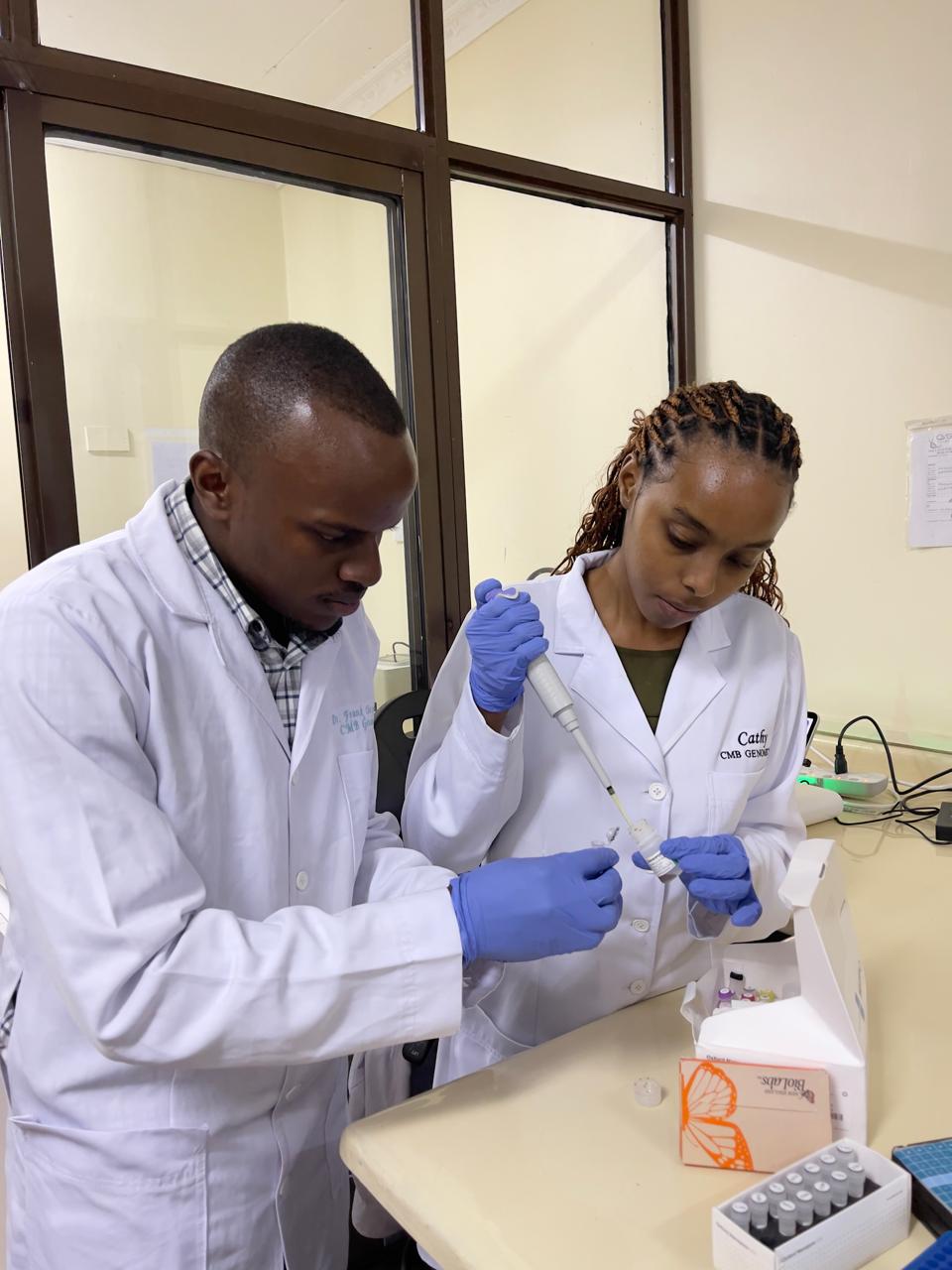
CMB Genomics is an East African public benefit organisation. We recruit and deeply phenotype population cohorts, bank the biospecimens, generate biological data across multiple layers on the same participants, and carry the analysis through to interpreted results.
Recruitment across all 47 Kenyan counties with structured clinical phenotyping at consent.
Consented, barcoded biospecimens under 20-year storage terms.
Cell biology, molecular and functional data generated on the same participants.
Fine-scale population mapping, immunogenetics and pharmacogenomics, delivered as interpreted results rather than raw files.
50,000 reference genomes across Eastern and Central Africa
A regional reference resource comparable in depth to existing international genome programmes, built under shared governance. It runs in three phases, starting in Kenya and extending through the East Africa Genome Consortium.
Kenya Reference Genome Initiative
1,000 Kenyan adults, all 47 counties, 46 ethnolinguistic groups, at 30× whole genome coverage. Phase 1 of the programme.
- Design
- Disease-agnostic, census-proportionate recruitment
- Multiomics
- Layered orthogonal assays on the same participants
- Pilot
- 200+ genomes sequenced across three language families
- Status
- Phase 1 under way, 2025–2027
East Africa Genome Consortium
National programmes in Uganda, Tanzania, Sudan and Rwanda, each adapted to local regulatory requirements, population structure and institutional partnerships.
- Phase 1 · 2025–2027
- 1,000 Kenyan genomes. Under way.
- Phase 2 · 2026–2030
- ~5,000 genomes across the MOU countries: Uganda, Tanzania, Sudan and Rwanda.
- Phase 3 · 2030–2035
- 50,000 genomes across Eastern and Central Africa.
570 million people across the programme footprint
Eleven countries, one active sequencing programme. Population figures from the World Bank, 2025.
ActiveIn progress, MOU signedExploration
| Country | Status | Detail |
|---|---|---|
| Kenya | Active | Under way |
| Uganda | In progress | MOU signed |
| Tanzania | In progress | MOU signed |
| Sudan | In progress | MOU signed |
| Rwanda | In progress | MOU signed |
| Ethiopia | Exploration | In development |
| Somalia | Exploration | In development |
| South Sudan | Exploration | In development |
| DR Congo | Exploration | In development |
| Cameroon | Exploration | In development |
| Burundi | Exploration | In development |
Training scientists who stay
Genomics in the region is constrained by the supply of trained analysts. Academy fellows train inside the programme and stay on it.
- Research fellowship
- Embedded in active research programmes
- Postgraduate partnerships
- With regional and international universities
- Short courses
- Clinical data management, bioinformatics and sequencing
- Accredited diploma
- In development
People
News
-
BioQuick News
Whole-genome sequencing of East African
populations on the Ultima Genomics UG200 platform ↗
External feature on KRGI pilot sequencing of East African populations.
-
ISMB 2026 · Washington DC
First KRGI pilot presented
Three posters presented, July 2026.
- ASHG 2026 One plenary and three abstracts accepted
- FAIS 2026 · Cape Town Federation of African Immunological Societies Congress ↗ Two plenary talks
-
MIRERC · Meru University
MIRERC 063/2025 ethics approval record
for KRGI ↗
Public registration of the 1,000-genome protocol across all 47 counties.
Work with us
We work with pharmaceutical and biotechnology partners, research funders and academic groups on cohort generation, data access and training.